Ossian
The Sorrows of Young WertherOssian appears not as a participant in the surrounding action but as the poetic voice of the songs Werther reads from his own translation. In those passages, recollection gives the dead a vivid presence, while scenes of mourning make loss feel both intimate and inescapable.
Identity and Framed Appearance
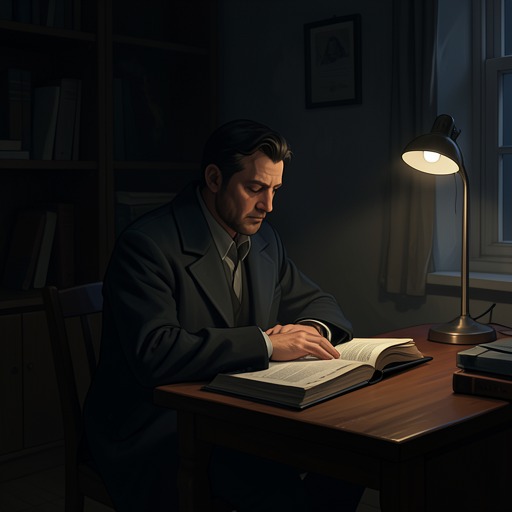
The songs enter the scene when Werther, visiting Charlotte, takes up his translation of Ossian at her request. He reads with tears in his eyes; the narrative thus presents Ossian through an act of recitation, not through a separate encounter or account of his life. The first excerpt invokes the rising light of Ossian’s soul after the evening star departs, making the poet’s name a threshold between the visible landscape and the remembered dead.
The Dead and the Work of Memory
The poetic voice recalls a gathering on Lora in the days of Selma’s feast. Fingal appears amid his heroes, accompanied by the bards Ullin, Ryno, and Alpin, while Minona’s song brings sadness into the assembly. Their former contests are remembered through the image of spring gales bending grass by turns: a lively picture of shared vigor set against the knowledge that the companions have since changed and passed away.
Another passage moves through the grief of Colma, left alone after Salgar and her brother die in combat. Her unanswered appeals, and her resolve to remain near her friends’ tomb, make mourning the center of the song. The poem then recalls Ullin’s account of Morar’s fall: Morar’s father mourns, his sister weeps, and Minona withdraws from the song. These linked laments show memory preserving not only heroic names but also the grief borne by those left behind.
Voice, Form, and Significance
Ossian’s poetic voice shifts among remembered scenes, quoted songs, and acts of musical companionship. In the account of Morar, the speaker says that he touched the harp with Ullin and that the song of morning rose. This movement toward morning does not erase the deaths already mourned; it places a moment of renewed song beside images of graves, tears, and voices that have ceased.
Within Werther’s reading, the songs’ repeated movement from landscape to recollection and from song to lament gives the dead an imaginative presence while emphasizing their absence. Ossian therefore matters both as the named source of the translated poems and as the voice through which the recitation dwells on friendship, grief, and mortality. The tears accompanying Werther’s reading make that elegiac material part of the scene’s emotional action.